

Resources

Resource Library
A collection of resources designed to inform and guide your experience with Recompose and human composting
How to Consider Your Soil Options
Learn more about the nutrient-rich soil created from the Recompose process and options for returning the soil.
Planning Ahead for Transportation
What to expect for the transportation of your body to Recompose and tips for Precompose members outside our service area.
Let’s Talk About Human Composting
In 2016, Katrina shared her concept of creating a scalable, urban model to turn human beings into soil at the end of life. TEDx Talk
Frequently Asked Questions
It is our mission to make the death care process as straightforward as possible. Below are some of our most common inquiries.
Yes, you can donate your organs and choose human composting.
Organ donation is only possible if someone dies in a hospital because they need specific equipment to keep the organs viable until the donation company arrives. Medical professionals remove organs within a few days after someone dies.
Our Services team will coordinate transportation to Recompose with the hospital. If you live outside Washington State, the local funeral home you’re working with will coordinate with the hospital.
Alternatively, full-body donations to medical schools and research projects usually embalm bodies to extend the time they can be studied. Embalmed bodies cannot undergo human composting. Some programs freeze the donor for non-embalmed use. So we encourage you to contact the donation program to understand their process and whether it is possible to donate your full body without embalming.
Choosing our human composting services is possible in most places outside of Washington State. Most clients that come to us from another state work with a funeral home in their area to arrange for transport. This funeral home will pick up a body at the place of death and arrange for transport to Recompose.
When you contact a funeral home, we suggest starting the conversation by saying something like, “I am looking to have my loved one’s body transported to the Seattle area. I have chosen a funeral home called Recompose to handle their death care services. Can you help me make arrangements?”
Families can also transport their person to Recompose in their personal vehicle with the correct permits. If you are interested in this option, please contact us for guidance.
Our Services team is here to support you and can discuss options, find a transporting funeral home, and help arrange for transport. Please contact our staff at (206) 800-8733 or services@recompose.life. Our article, Arranging for Transportation, also has information to help you.
Please note: Bodies that come to Recompose must not be embalmed. While most funeral homes are experienced with transporting bodies, they may not yet have heard of human composting or have experience with this kind of transport.
Yes, Recompose is a fully licensed funeral home as well as a licensed natural organic reduction facility located in Seattle, Washington. Our team includes licensed Funeral Directors and Embalmers, as well as certified Natural Organic Reduction Operators. Recompose also holds a license to sell preneed arrangements.
We are regulated by the WA State Department of Licensing Funeral Board, the WA State Board of Health, and the Puget Sound Clean Air Agency.
The Recompose human composting process creates approximately one cubic yard of soil per body which is roughly 3 x 3 x 3 feet. This amount fills the bed of most pickup trucks and weighs about 1,000 pounds. The process begins with three cubic yards of plant material.
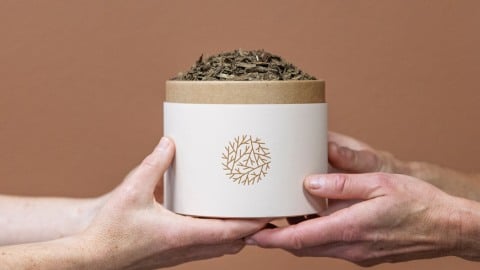
Families can take some or all of the soil home once the process is complete, and donate what does not go home to conservation efforts. Learn more about how to consider your soil options.
Many Recompose clients choose to donate some soil to the Land Program and take a portion to share with friends and family to use on gardens, on house plants, and scatter across favorite places.
Through the Recompose Land Program, we partner with nonprofit organizations to protect and regenerate ecosystems through conservation, rewilding, and other restoration practices. These Land Partners receive soil donated from Recompose clients to use in projects that benefit the land they steward.
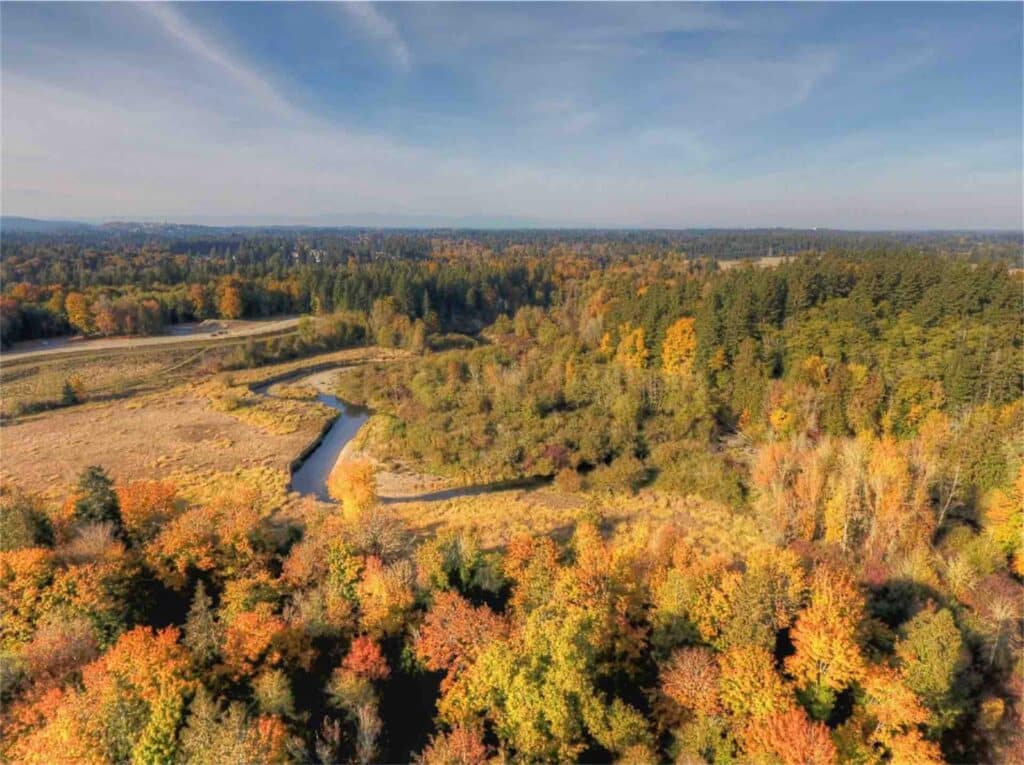
Our Land Partners focus on ecologically significant areas across diverse, protected landscapes like forests, prairie grasslands, and wetland areas. Some of the many species that are supported through soil donation include:
- Elk
- Beaver
- River otter
- Black-tailed deer
- Juvenile salmonids
Recompose is proud to support this work to allow nature to flourish again.
Clients who choose to donate soil through the Land Program have shared that they connect with the concept of returning to the natural environment as a whole rather than to a single location—instead of becoming a tree, they become part of the forest.
Recompose and our Land Partners share a common interest in connecting the human experience with the natural environment, and recognize the use of soil from human composting as a way to strengthen this connection.
Tour Recompose
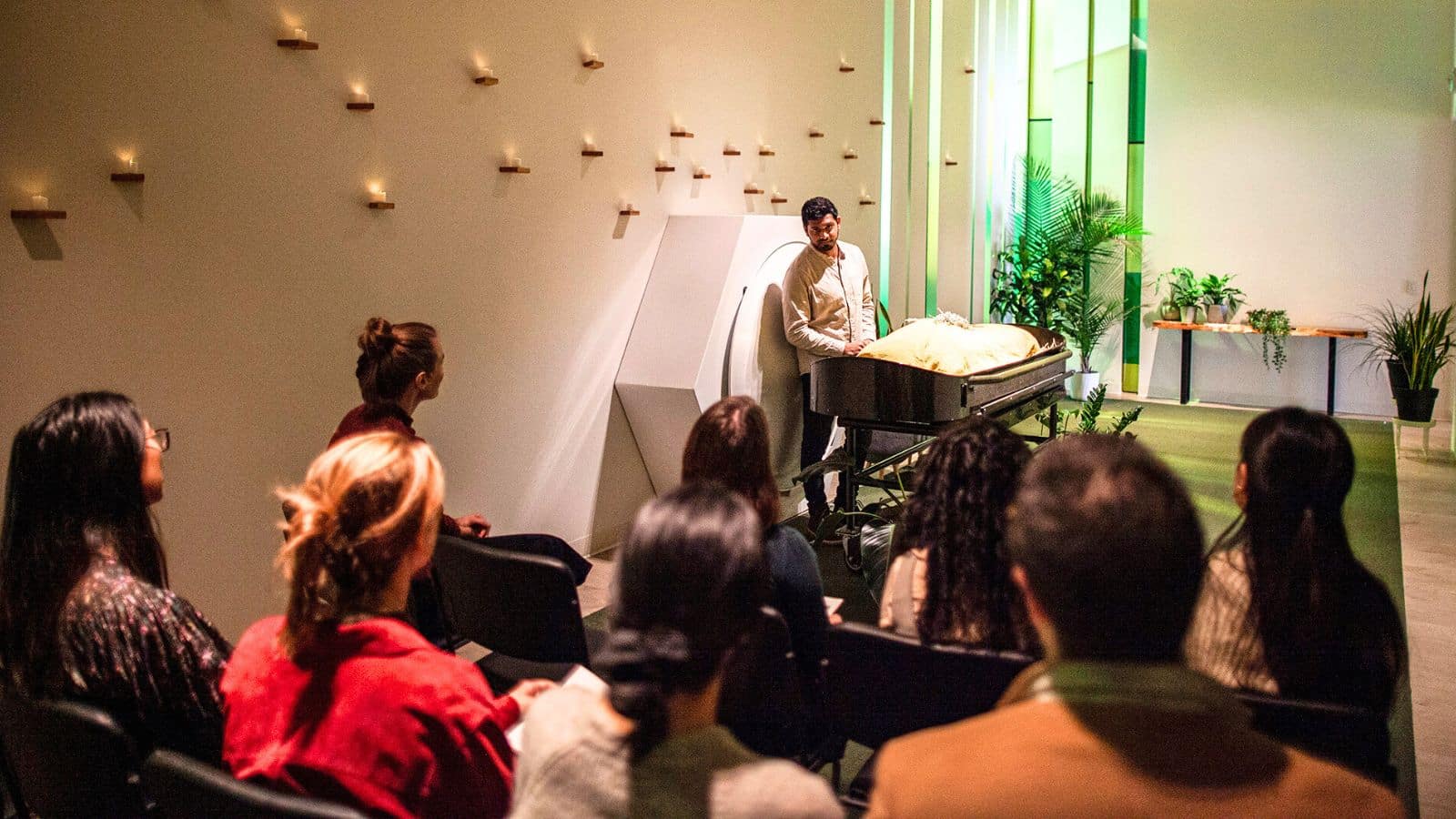
Take a virtual or in-person tour of the world’s first human composting facility. You’ll see our ceremonial spaces and learn about the human composting model including the design, development, and legalization process.
Guide to Human Composting
Deepen your understanding of human composting and get involved in our guide that includes legalization information, advocacy tools, and more.
Community Fund
The Recompose Community Fund helps provide human composting to individuals who couldn’t otherwise afford the full price of the service.