

Our Model
Recompose developed the process of human composting to transform human remains into soil. This soil can then be used to regenerate the earth that supports us our whole lives.
Environmental Impact
Recompose utilizes the principles of nature to return bodies to the land, sequestering carbon and improving the health of our natural surroundings.
Healing the Climate
For every person who chooses Recompose over conventional burial or cremation, one metric ton of carbon pollution is prevented. In addition, our approach to human composting uses 87% less energy than conventional burial or cremation. Recompose allows you to choose an end-of-life option that strengthens the environment rather than depleting it.
Moving Away from Toxic Practices
Current funerary practices are environmentally problematic. Each year, 2.7 million people die in the U.S., and most are buried in a conventional cemetery or cremated.
Cremation burns fossil fuels and emits carbon dioxide and particulates into the atmosphere. Conventional burial consumes valuable urban land, pollutes the soil, and contributes to climate change through the resource-intensive manufacture and transport of caskets, headstones, and grave liners.
Creating Soil Health
The breakdown of organic matter is an essential component in the cycle that allows the death of one organism to nurture the life of another. Soil is the foundation of a healthy ecosystem. It filters water, provides nutrients to plants, sequesters carbon, and helps regulate global temperature.
Our Process
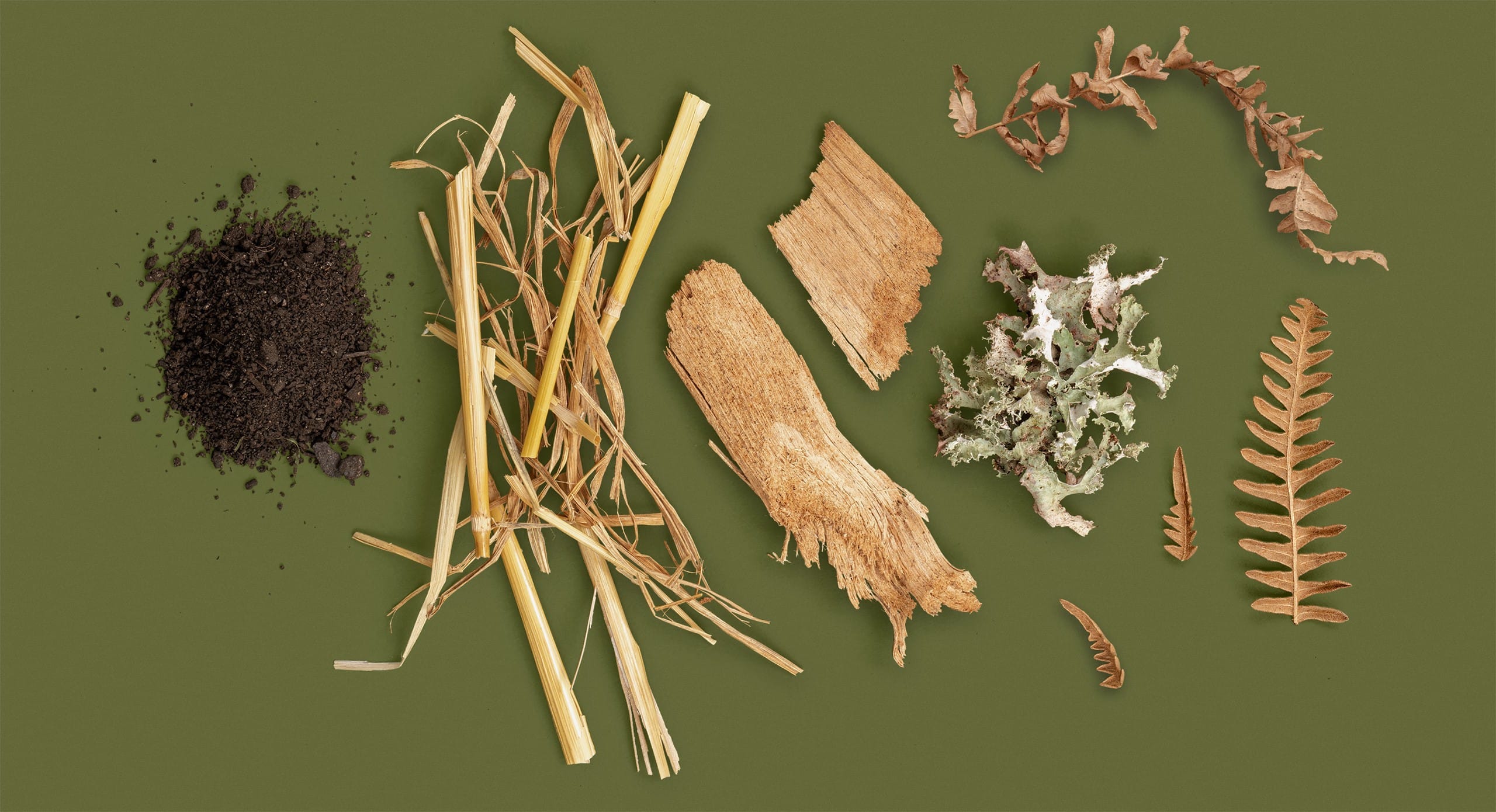
Human composting was developed by Recompose over years of rigorous research and design. The biological process mimics the earth’s natural cycles and is similar to what occurs on the forest floor as organic material decomposes and becomes topsoil. Learn more about how it works.
PHASE 1
The Cycle Begins
Shortly after someone dies, they come into Recompose's care. Over the next eight to twelve weeks, our staff provides respectful and personalized care while the body transforms into soil.
PHASE 2
The Laying In
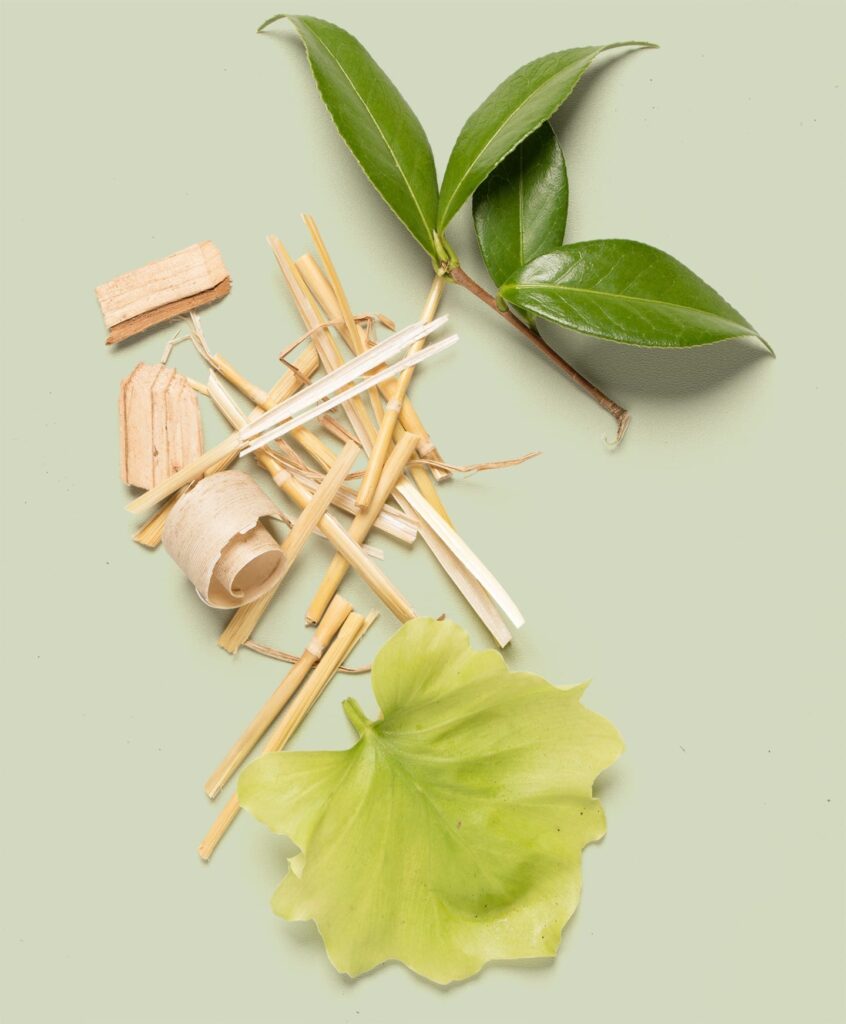
Our staff lay the body in a vessel surrounded by wood chips, alfalfa, and straw carefully calibrated and specially tailored to each body. The vessel is closed and the transformation into soil begins.
PHASE 3
The Vessel
The body and plant material remain in the vessel for five to seven weeks. Microbes power change on the molecular level, resulting in the formation of a nutrient-dense soil.
PHASE 4
The Soil
Each body creates about one cubic yard of soil amendment, which is removed from the vessel and allowed to cure for three to five weeks. Once completed, it can be used to enrich conservation land, forests, or gardens.
PHASE 5
Life After Death
The soil created returns the nutrients from our bodies to the natural world. It restores forests, sequesters carbon, and nourishes new life.
Soil Donation
We partner with nonprofit conservation organizations so clients can donate soil to restore and revitalize protected areas where vital environmental repair is needed.
We designed the Recompose Land Program to offer clients the opportunity to give soil back to the larger ecosystem. Clients can donate any amount of soil for projects focused on conservation, rewilding, and other restoration practices.
Each Land Partner in our Land Program manages restoration projects across diverse, protected landscapes like forests, prairie grasslands, and extensive wetland areas, that support species including elk, beaver, river otter, and a broad range of bird species. Their work reverses the loss of habitat and biodiversity to allow nature to flourish again.
Our Location
Recompose is a full-service green funeral home in Seattle supporting clients across the country. Our experienced funeral directors provide personalized support throughout the entire process.
The Space
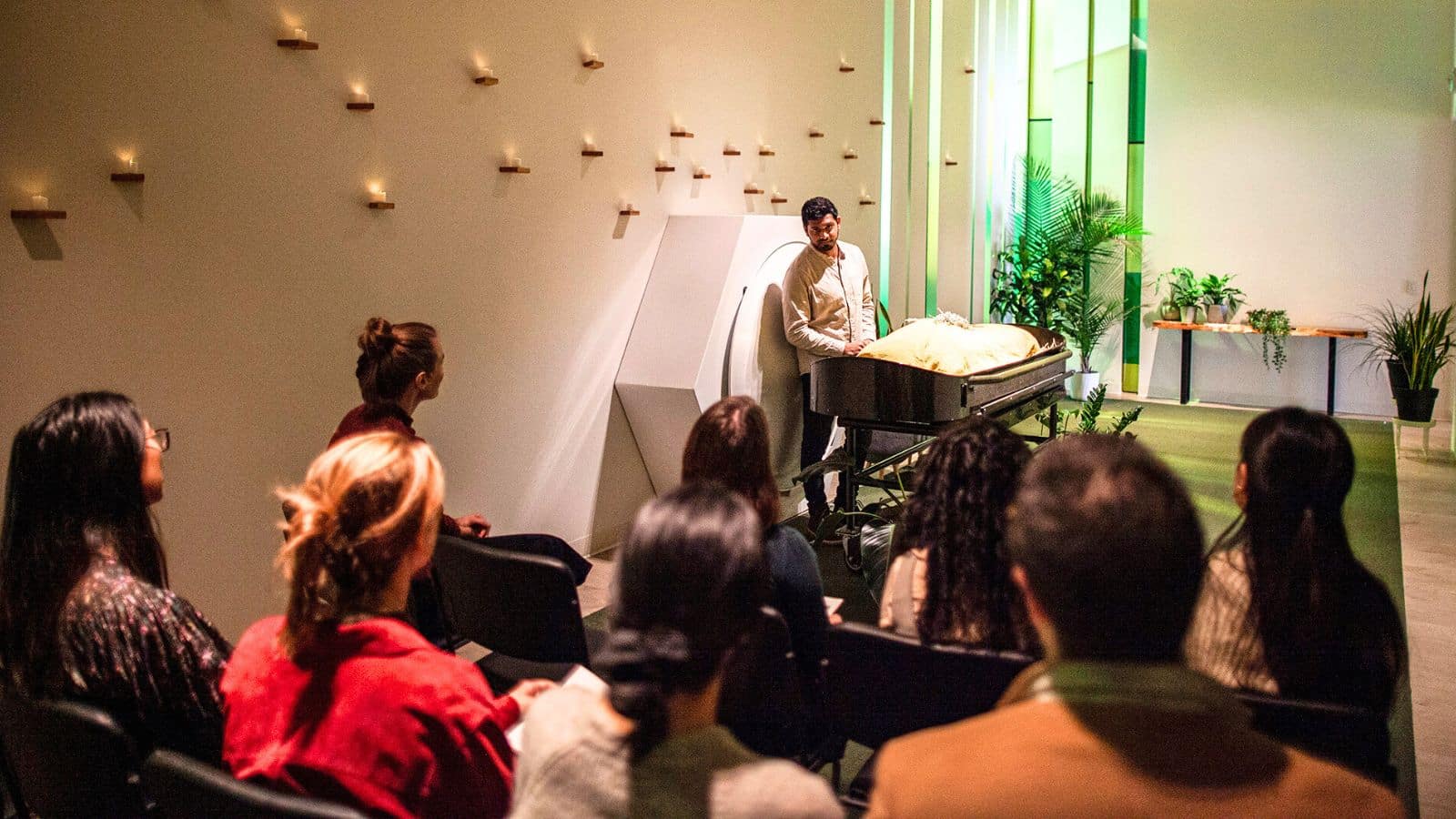
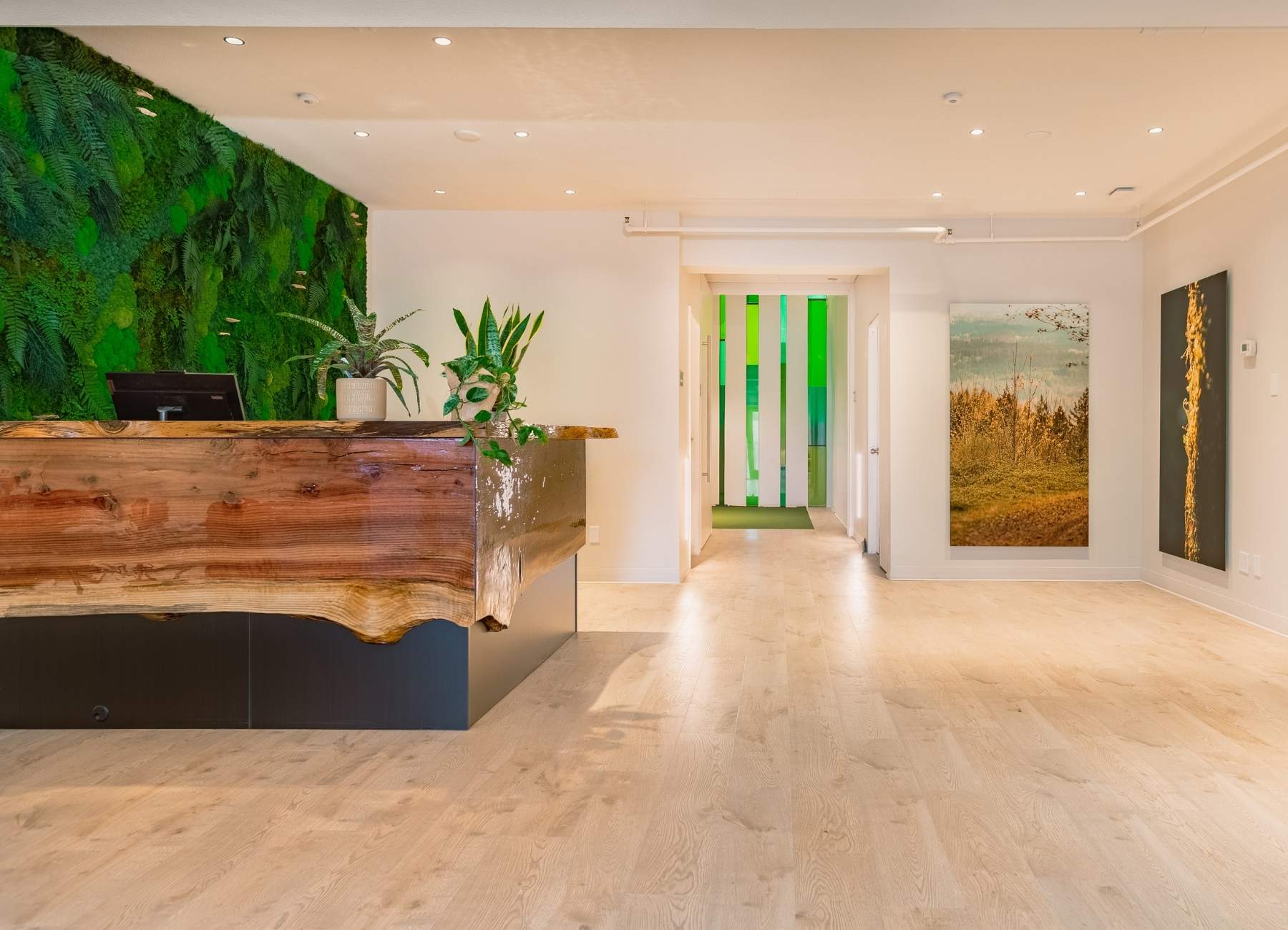
Our modern, beautiful funeral home in Seattle is designed for friends and family to honor the person who has died. We have 33 vessels at this location where bodies are transformed into soil.
The Laying In
At the time of laying in, our staff place the body into a composting vessel surrounded by a mixture of wood chips, alfalfa, and straw carefully calibrated and specially tailored to each individual. The vessel is closed and the transformation into soil begins. Much like the moment when a body is interred into the earth during a burial, the laying in represents a moment of transition.

The Vessels
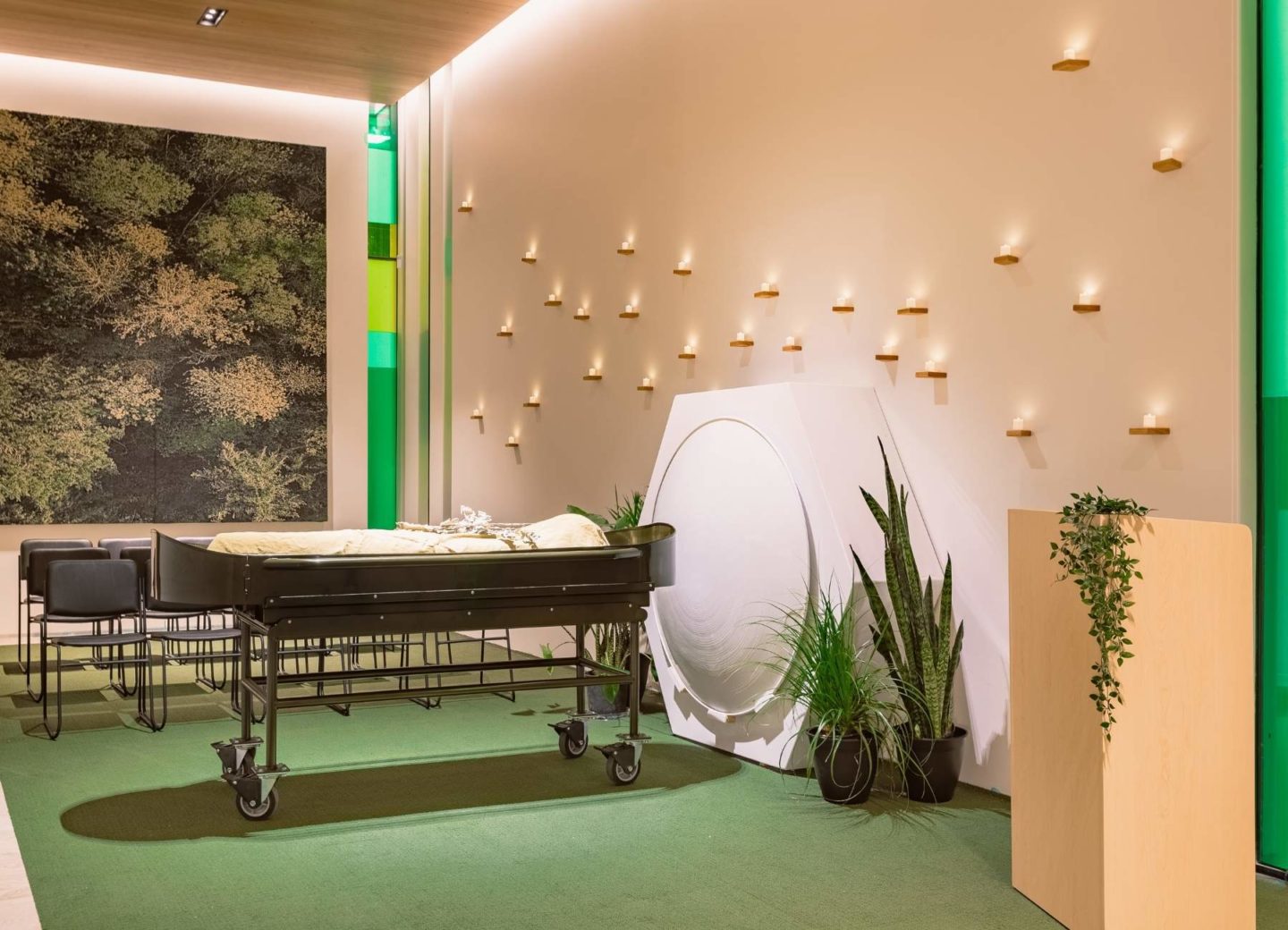
The soil transformation takes place inside a Recompose vessel. Your loved one’s body is surrounded by wood chips, alfalfa, and straw in the vessel and is closely monitored while microbes naturally break the body down into soil.
FAQ
Below are answers to some of the most common questions we receive.
How It Works
Human composting is the transformation of a human body into soil. Recompose places each body into a stainless steel vessel along with wood chips, alfalfa, and straw. Microbes that naturally occur on the plant material and on and in our bodies power the transformation into soil.
Over the next five to seven weeks, the body inside the vessel breaks down thanks to the natural action of the microbes. The soil is then removed from the vessel, screened for non-organic items such as hip replacements or stents, and allowed to cure for an additional three to five weeks.
Once the process is complete, the soil can be used on trees and plants, or donated to conservation efforts. Each body creates about one cubic yard of soil.
Watch Recompose Founder and CEO, Katrina Spade, describe how human composting works during her 2023 talk at the End Well Conference.
Explore More
Learn more about the steps involved in the human composting process.
Bones and teeth do not fully break down in the human composting process due to their mineral composition. Similar to other forms of death care, equipment is needed to reduce the bones.
Microbes do the primary work of human composting. By controlling the ratio of carbon, nitrogen, oxygen, and moisture, human composting creates the perfect environment for microbes and beneficial bacteria to thrive. To create that environment, Recompose uses a mixture of plant materials carefully calibrated and tailored to each body.
Recompose staff rotate each vessel at several points during the process to ensure thorough aeration and exposure to resources for the microbes.
Bones are reduced to a fine powder by equipment after the soil is removed from the Recompose vessel. Staff also screen for non-organics such as implants, which are recycled whenever possible. The reduced bone is added back to the compost to help balance the compost nutrients and make minerals available to plants. It continues to break down and return to the environment over time.
Recompose follows all compost-testing regulations put forth by the Washington State Department of Licensing and the Board of Health. The pH range of Recompose compost is usually between 6.5 and 7, which is ideal for most plants.
Learn more about the human composting process.
The human composting process generally takes between two to three months. Our staff communicate timing and key moments throughout the process. Each body spends about five to seven weeks in a vessel, then the soil is transferred to an aerated bin to cure for an additional three to five weeks.
Recompose follows all compost-testing regulations put forth by the Washington State Department of Licensing and the Board of Health. The pH range of Recompose compost is usually between 6.5 and 7, which is ideal for most plants. Learn more about the composition of Recompose soil here.
Watch Recompose Founder and CEO, Katrina Spade, describe timing in the human composting process during her 2023 talk at the End Well Conference.
Explore More
Learn more about the steps involved in the human composting process.
Yes. We offer both virtual tours and in-person guided, small group tours led by Recompose staff. Learn more and sign up for a tour.
Environmental Impact
Human composting is a more environmentally-friendly option than burial or cremation. This is because the process does not use fossil fuel like cremation, does not require the casket and cemetery resources of burial, and sequesters carbon as soil is created. As the nutrients in the compost are used over time by the plants in contact with it, the impact of a person’s choice for human composting continues to expand exponentially.
To measure the environmental impact of human composting, expert Dr. Troy Hottle developed a scientific model to compare cremation, conventional burial, green burial, and human composting. The model showed that human composting and green burial perform far better than cremation or conventional burial at reducing carbon. The research showed that between .84 and 1.4 metric tons of carbon dioxide will be saved each time someone chooses human composting.
Human composting saves carbon through a combination of factors. The process uses 87% less energy than cremation, which typically uses fossil fuel to create sustained heat of over 1,600 degrees Fahrenheit for 3 to 4 hours.
No casket or coffin is used during human composting, nor is a concrete grave liner required – all items that add to the carbon footprint of a death.
When human composting transforms the organic material of our bodies, the carbon is captured, or sequestered, in the soil created. Rather than being released as carbon dioxide gas through exhaust during a cremation or as a hydrocarbon gas like methane, the carbon contained in each body returns to the earth. As the nutrients in the compost are used over time by the plants in contact with it, the impact of a person’s choice for human composting continues to expand exponentially.
Soil Information
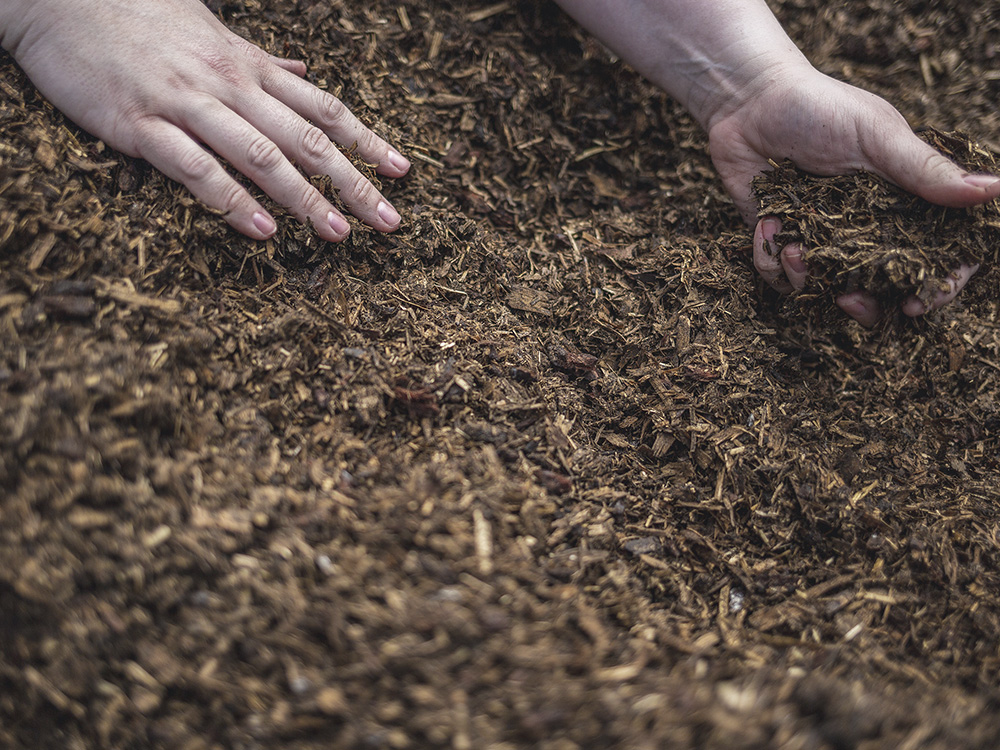
The Recompose human composting process creates approximately one cubic yard of soil per body which is roughly 3 x 3 x 3 feet. This amount fills the bed of most pickup trucks and weighs about 1,000 pounds. The process begins with three cubic yards of plant material.
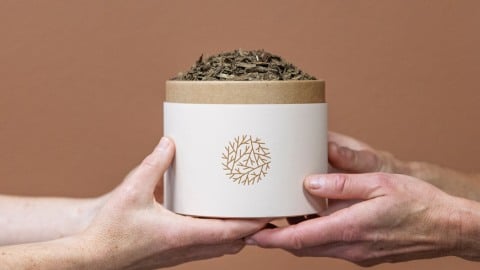
Families can take some or all of the soil home once the process is complete, and donate what does not go home to conservation efforts. Learn more about how to consider your soil options.
The Recompose process creates approximately one cubic yard of soil—approximately 1,000 pounds. Soil tests indicate compost created by the Recompose process is appropriate for established shrubs, trees, house plants, and flower gardens; use on tender annuals should be avoided.
Analysis indicates compost that is good for use on plants. The pH range of Recompose compost is usually between 6.5 and 7, which is ideal for most plants. Electrical conductivity is moderate, indicating the presence of soluble (plant-available) ions. The nitrogen-phosphorus-potassium-sulfur content is balanced, providing good nutrient content with a good supply of macronutrients.
Respiration test results indicate Recompose compost is at “Very Stable” levels, indicating that most of the “fast pool” of sugars have been used up by microbes and nutrients are stabilized. Nitrate content is high, indicating aerobic status and advanced decomposition. Bioassay does show relative immaturity, so we recommend use as a mulch and at lower concentration around roots of young plants.
Recompose follows all compost-testing regulations put forth by the Washington State Department of Licensing and the Board of Health.
The soil created by human composting is biologically valuable material that can be used to nourish trees and plants. It can be used in yards, flower gardens, trees, house plants, and in natural environments. Its pH of 6.5 – 7 is ideal for most plants. It has a balanced nutrient content with a good supply of macronutrients.
Recompose customers have used their person’s soil to create groves of trees, nourish rose gardens tended by their person while they were alive, or scattered in a favorite natural area.
In Washington State, the law for scattering human composting soil is the same for cremated remains—you must have permission of the landowner. It is legal to scatter in navigable waterways.
If you have any questions about what you can do with your person’s soil, our staff is here to help.
Legal
Human composting is now legal in over a dozen states, starting with Washington State in May 2019.
Human composting has been legalized in the following states:
California
California became the fifth state to legalize human composting.
New Jersey
New Jersey became the 14th state to legalize human composting.
Washington
In 2019, Recompose led the movement for Washington State to become the first place in the world to legalize human composting.
Human composting legislation has been introduced in over a dozen states across the country, including:
New Hampshire
For a third year in a row, a bill to legalize human composting is moving through the New Hampshire state legislature.
Human Composting Advocacy
Recompose supports advocates and legislators working to increase access in more states across the country. Learn more about the legislative process and get involved.