



Elaine Nonneman
November 20, 1947 – November 26, 2024
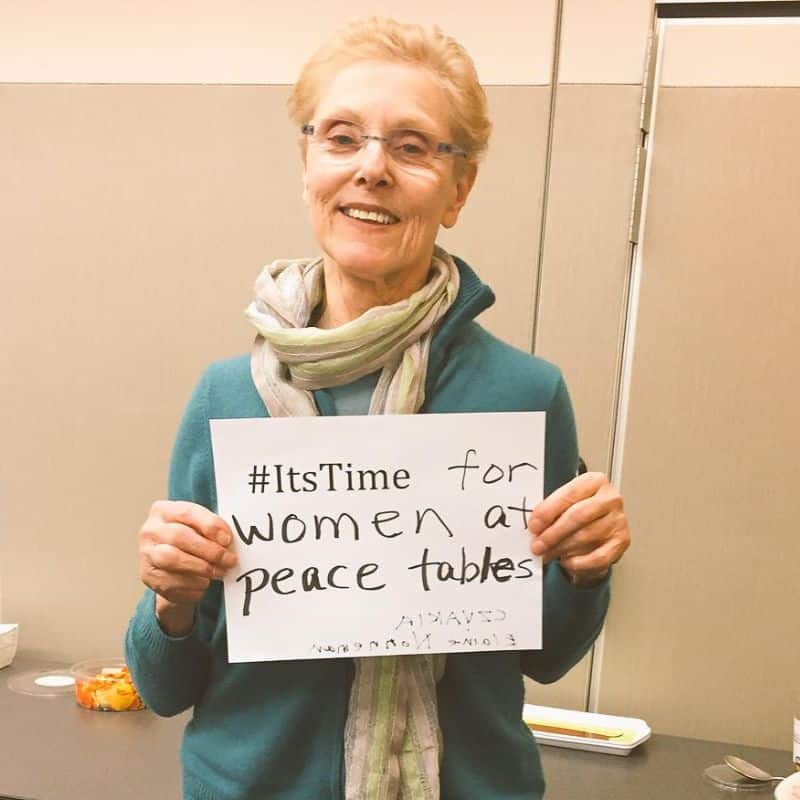
Elaine Nonneman, lifelong activist and feminist social justice philanthropist, passed away on November 26, 2024, in Seattle after a sudden illness.
Born in 1947, Elaine grew up in Cleveland, Ohio, and graduated from Duquesne University. She eventually settled in Seattle, Washington, where she spent the remainder of her life.
She traveled extensively, which influenced her worldview. This included teaching English in China for several years, Earthwatch expeditions, and eco-tourism. Later in life, she went on numerous human rights field visits and grantee site visits in different countries.
Elaine first got involved in the movement towards social justice philanthropy in the 1980s by joining A Territory Resource (now the Social Justice Fund NW). For the rest of her life, she was supportive of SJF, the Potlatch Fund, and many other Seattle, national, and global organizations that aimed to promote a change in philanthropy and in the world.
In a 2024 interview, Elaine said that one of the biggest influences on her philanthropy was the emergence of the “Just Transition” framework. She described that framework as moving from an extractive, colonial, racist system to a regenerative one. She believed that philanthropy should “stop hoarding money, give more and open-ended, transfer decisions about how it’s used to grantee partners, and pursue partnerships with groups and movements led by the people most oppressed by extractive systems.”
Eventually, Elaine decided to create a foundation of her own, the Channel Foundation, in 1998, because she was passionate about advancing women’s legal equality and human rights in the United States and internationally.
One of Elaine’s primary goals with the Channel Foundation was promoting the power of feminist civil society organizations globally. She supported the development of numerous regional women’s funds worldwide and was especially focused on promoting the inclusion, leadership, and rights of Indigenous women and women with disabilities. She had a long interest in promoting the inclusion of women, peace, and security, and the protection and well-being of human rights defenders.
Under Elaine’s leadership, the Channel Foundation embraced a partnership model. “We believe that regional women’s [and human rights] funds are best positioned to know and distribute our funding to groups on the ground that we couldn’t reach as a small private foundation,” said Elaine.
Elaine loved connecting with grantees and creating personal connections at gatherings. In fact, always curious and interested in the experiences of others, Elaine regularly hosted students and other travelers in her home through programs at the Seattle World Affairs Council.
Elaine was a dedicated member of the Women Donors Network, and former co-chair of its international peace circle, focused on lobbying for the Women, Peace & Security Act, and support for the leadership of Afghan women. She was an active member in programs of the Center for Women & Democracy in Seattle.
In addition to her dedication to women’s human rights and peace, Elaine also served on the Board of Directors for the Central Co-Op; was a supporter of sustainable, community-centered development initiatives; and was an investor in green enterprises and installations of solar energy and rainwater catchment systems.
Elaine was active in her Miller Park neighborhood, including being a staunch advocate for her unhoused neighbors and developing affordable housing projects such as the Julia Place Apartments.
She loved gardening, attending cultural and performance events, juggling too many projects at once, tending to the details at her properties, and taking late-night strolls with her beloved cats.
In the year before her passing, Elaine was in the process of retiring from the Channel Foundation and shifting her attention to focus even more on increasing affordable housing in the Seattle area.
She was the daughter of Frederick and Julia Nonneman (both deceased); sister of Marcia Emch (deceased), Anita Nonneman and Lois Nonneman Agnello; and aunt of Julia (deceased), Jason, and Jennifer Kunes.
Elaine has been laid to rest in Seattle, Washington. If you feel moved to honor her, please support one of the Channel Foundation’s grantee partners or donate to the Social Justice Fund NW. The Foundation will organize a celebration of Elaine’s life in the coming months.