
As you or someone you love begins to think about the end of life, one of the major decisions to make is what kind of death care you want. For some, traditional burial and cremation may not be appealing options. If making a positive impact on the earth is important to you or a loved one, a green funeral might be the right option. So, what exactly defines a green funeral?
Definition of a green funeral
A green funeral minimizes environmental impact by avoiding the use of harmful embalming fluids. Unlike conventional practices, green funerals often use biodegradable materials for caskets. The goal of a green funeral is to allow your body to return to the earth naturally.
Types of green funeral practices
Green funeral practices offer various alternatives to conventional burial and cremation, providing distinct options.
| Human Composting | Natural (or Green) Burial | Alkaline Hydrolysis | |
|---|---|---|---|
| Process | Body placed in a vessel with woodchips, alfalfa, and straw. Microbial activity transforms it into nutrient-rich soil. | Body buried without harmful embalming. Biodegradable coffin or shroud is used. Decomposition occurs naturally in the Earth. | Body placed in a pressurized vessel with water and potassium hydroxide; heat and pressure dissolve soft tissue, leaving bone fragments. |
| Materials Used | Woodchips, alfalfa, straw, and an enclosed vessel. | Biodegradable coffins, wicker caskets, or shrouds. | Water, potassium hydroxide, and a stainless-steel vessel. |
| Timeframe | 8 to 12 weeks for full transformation into soil. | Months to years for natural decomposition. | 4 to 16 hours for full dissolution. |
| End Result | About 1 cubic yard of nutrient-rich soil that can be spread, used for gardening, or donated to conservation projects. | The body returns to the Earth, enriching the soil naturally at the burial site. | Ash-like remains (processed bone fragments) are returned. |
| Environmental Benefits | Uses 87% less energy than burial or cremation. Enriches soil and directly benefits ecosystems or gardens. | No toxic embalming fluids. In some cases, supports land conservation. | Lower carbon footprint than cremation. Avoids mercury and emissions from burning. |
| Location | Licensed human composting facilities. | Green cemeteries, conservation burial grounds, hybrid burial grounds. | Licensed alkaline hydrolysis facilities. |
| Common Names | Human composting, natural organic reduction, soil transformation, terramation. | Green burial, natural burial. | Alkaline hydrolysis, aquamation, water cremation. |
Human Composting
Human composting, also known as natural organic reduction, soil transformation, or terramation, is the process of transforming human remains into soil. Human composting takes place within licensed facilities, utilizing specialized staff and equipment. The process uses a combination of woodchips, alfalfa, and straw to break down a body into healthy, nutrient-rich soil. Once complete, the soil can be used to plant a tree in your backyard or donated to conservation efforts. Each body produces about one cubic yard of soil, and human composting uses 87% less energy than traditional burial or cremation. This can directly benefit a large ecosystem, land trust, or even your garden.
Natural (or Green) Burial
A natural or green burial does not use harmful embalming processes. Instead of a conventional concrete or metal casket, wicker or biodegradable coffins are typically used. This facilitates the natural process of breaking down a body into healthy soil. Green cemeteries and burial sites often work with land conservation efforts to regrow damaged ecosystems.
Alkaline Hydrolysis
Alkaline hydrolysis, also known as aquamation or water cremation, is a process that transforms a body after death using a pressurized vessel filled with water and potassium hydroxide, heated to over 300 degrees Celsius. This solution breaks down the body, leaving only bone fragments, which are then ground into an ash-like substance and returned to the family. Like human composting, alkaline hydrolysis aims to reduce the environmental impact of the funeral industry.
Where are green funerals held?
Green funerals can take place in a variety of settings, from natural burial grounds to specialized facilities for newer options like human composting.
Human Composting Facilities
Human composting is the newest and fastest-growing form of green funeral. Since 2019, more than five human composting facilities have been established, including in Washington, Nevada, and Colorado. Human composting is now legal across more than a dozen states in the US.
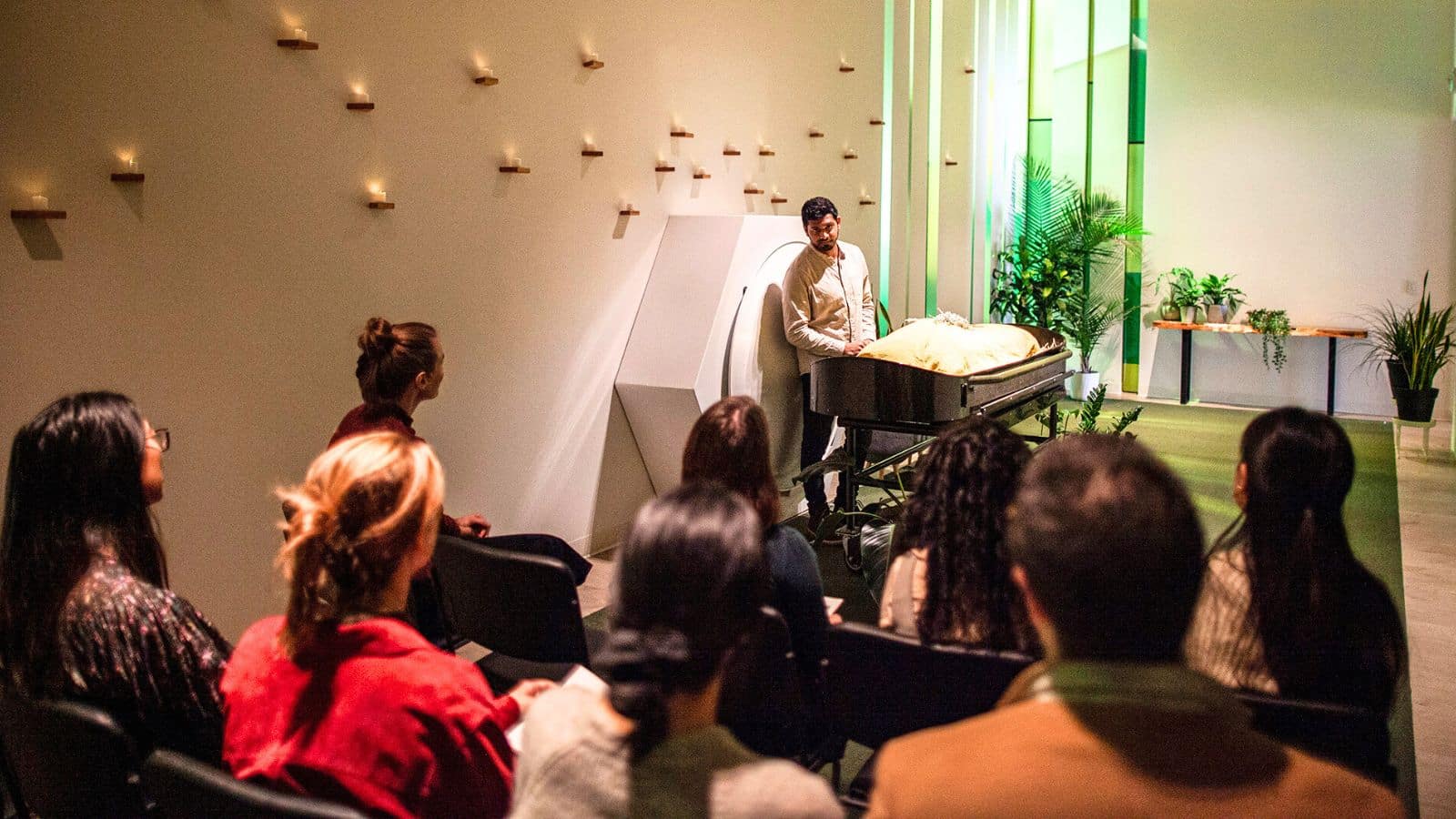
Recompose, based in Seattle, Washington, is the industry-leading human composting company. After years of collaboration and grassroots legislative work, Recompose became the world’s first human composting company in 2017. The Recompose human composting process mimics the Earth’s natural cycles and is similar to what occurs on the forest floor as organic material decomposes and becomes topsoil. The process takes place in a state-of-the-art facility, transforming a body into nutrient-rich soil in 8 to 12 weeks.
The resulting soil can be donated to conservation projects through the Recompose Land Program to restore and revitalize protected areas where vital environmental repair is needed. The soil can also be used by family and friends to nourish new life across gardens, orchards, or favorite hiking trails. For every person who is composted, one metric ton of carbon is saved.
Green burial sites
Three main types of sites offer green burial. All three are offered in many different places around the world and share a goal of reducing environmental harm.
- Green burial grounds, also known as natural burial cemeteries or green cemeteries, offer the typical services of a traditional cemetery, but do so while minimizing environmental harm and land usage. They don’t use embalming fluid or concrete vaults, and sometimes they may also exclude cremated remains.
- Conservation burial grounds work to restore natural landscapes populated by native vegetation and wildlife. They are often on land owned by a conservation easement or land trust. Typically, some or all of the green burial fees pay for land conservation efforts.
- Hybrid burial grounds, also known as hybrid cemeteries, offer both natural burial grounds and a conventional cemetery. Some hybrid cemeteries prohibit the use of pesticides on their grounds. Within their natural burial grounds, they don’t allow embalming or permit concrete burial vaults.
Funeral homes offering Alkaline Hydrolysis
Alkaline hydrolysis is legal in many states and offered in many funeral homes around the US. We recommend contacting your local funeral home if water cremation is of interest to you or a loved one.
Why not just get cremated or buried?
Choosing a conventional funeral option may seem simpler and, in some cases, more affordable. The goal of all green funerals is to leave a positive impact on the earth when you die, and, unfortunately, conventional funeral practices are harmful to the environment. While cremation burns fossil fuels and emits carbon dioxide and toxic particulates into the air, cemeteries consume urban space, and the chemicals used in embalming can seep into the ground and damage ecosystems. Additionally, they can cause health issues for embalmers.
Are all green funeral providers the same?
Finding a funeral home that offers something that feels meaningful and aligned with your values may require more effort. This map shows dozens of Green Burial grounds across the country. Additionally, the Green Burial Council lists certified natural burial providers and has information on most green cemeteries in the United States, Canada, and Central America. These natural burial providers are required to follow certain standards and guidelines.
How much does a green funeral cost?
The cost of a green funeral can vary widely depending on the type of service you choose, your location, and the specific arrangements you make. Options like human composting, green burial, and alkaline hydrolysis each have their own pricing considerations, and understanding what’s included can help you choose the right fit for your needs and budget.
Human Composting
The price for human composting with Recompose is $7,000. According to a 2023 study conducted by the National Funeral Directors Association, the median cost for a funeral with a coffin and burial is $8,300 (not including the burial plot itself, which can range from the hundreds to the tens of thousands), and the median cost for cremation is $6,280. Learn more about how the cost of human composting compares to other options.
Green Burial
The cost of a green burial ranges greatly depending on the location. According to various green burial providers, the cost typically ranges from $5,000-$8,000. The price will typically include a green burial cemetery plot, fees to open and close the grave, a plot marker, and a one-time endowment to a perpetual care fund. You can save money by providing a casket, as the law requires funeral homes to accept any appropriate burial container without charging an additional fee.
Alkaline Hydrolysis
The price of Alkaline Hydrolysis ranges depending on your location, service provider, and additional services. According to multiple providers, this price typically starts around $2,000, but can run up to $5,000.
How can I make a funeral more eco-friendly?
Many green burial practices can be arranged by talking with a conventional funeral provider or doing it on your own. Some examples include:
- Skipping the chemical embalming process
- Opting not to line a burial site with concrete
- Using a biodegradable casket or a casket made of natural materials, such as a plain wood casket or a soft wood casket.
- If you own rural property, home burial may be an option. Be sure to check local zoning requirements and obtain the required permits.
How to plan a green funeral
If you’ve decided that a green funeral aligns with your values, the next step is to explore providers who support environmentally responsible end-of-life options. Many offer services across the country, so you’re not limited by location.
Recompose is a green funeral home offering human composting services to clients in all fifty states. Whether you’re planning or navigating a recent loss, their team is available 24/7 at (206) 800-8733. Learn more about Recompose’s human composting services.
If you are researching options and planning for the future, prepaid funeral plans allow individuals to cover funeral expenses in advance, sometimes locking in today’s prices. Learn how Precompose works.