

Martha recently shared she’d like to be composted on her farm. The comment was lighthearted, but the interest it provoked was very real: Can a person actually be composted, and could it happen on private land? Read on to learn everything you need to know about human composting.
Martha Stewart’s Remark that Made Human Composting Go Viral
On a recent episode of the 50+ & Unfiltered podcast, when asked by the host, “Do you want to be buried or cremated?” Martha answered, “Oh, I’m gonna be composted…these coffin things and all that stuff, no way.” Martha, who is 84, shared that her beloved horses were buried naturally on her farm—and that she’d like a similar return to nature at the end of her life.
At first glance, it was a casual comment in her signature dry humor. But the response generated points to something deeper: more people are rethinking what it means to leave a legacy, give back to the earth, and plan ahead with intention.
At Recompose, we’ve spent more than a decade helping people understand and access human composting. We’re delighted that Martha’s reflection has sparked a national conversation.
What Human Composting Really Is
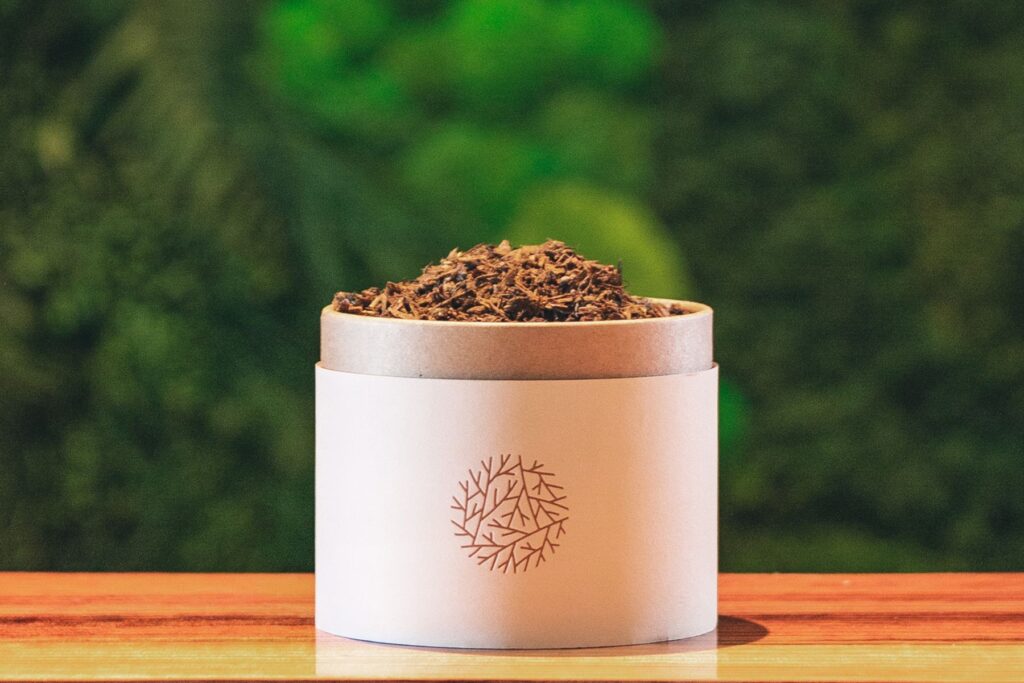
Human composting—also called natural organic reduction or soil transformation—is a process that transforms a human body into nutrient-rich soil.
In 2011, Recompose founder and CEO, Katrina Spade, set out to create an eco-friendly funeral alternative and developed the method now known as human composting. She founded Recompose in 2017, and in 2020 we opened the world’s first human composting facility. Today, Recompose offers human composting services to people in all 50 states.
The human composting process mimics the earth’s natural cycles in a controlled environment, similar to what occurs on a forest floor as organic material decomposes and becomes topsoil. It takes about 8-12 weeks from start to finish.

Can You Actually Be Composted on Your Own Land?
Martha’s comment surfaced a common misconception: you cannot be legally composted directly on private property. Human composting must happen in a licensed facility that meets specific environmental and health standards.
However, there are several ways human composting is legally supported today:
- Human composting in a licensed facility is legal in over a dozen states.
- You can choose human composting no matter where you live. Many people plan ahead even if their state is not yet legal.
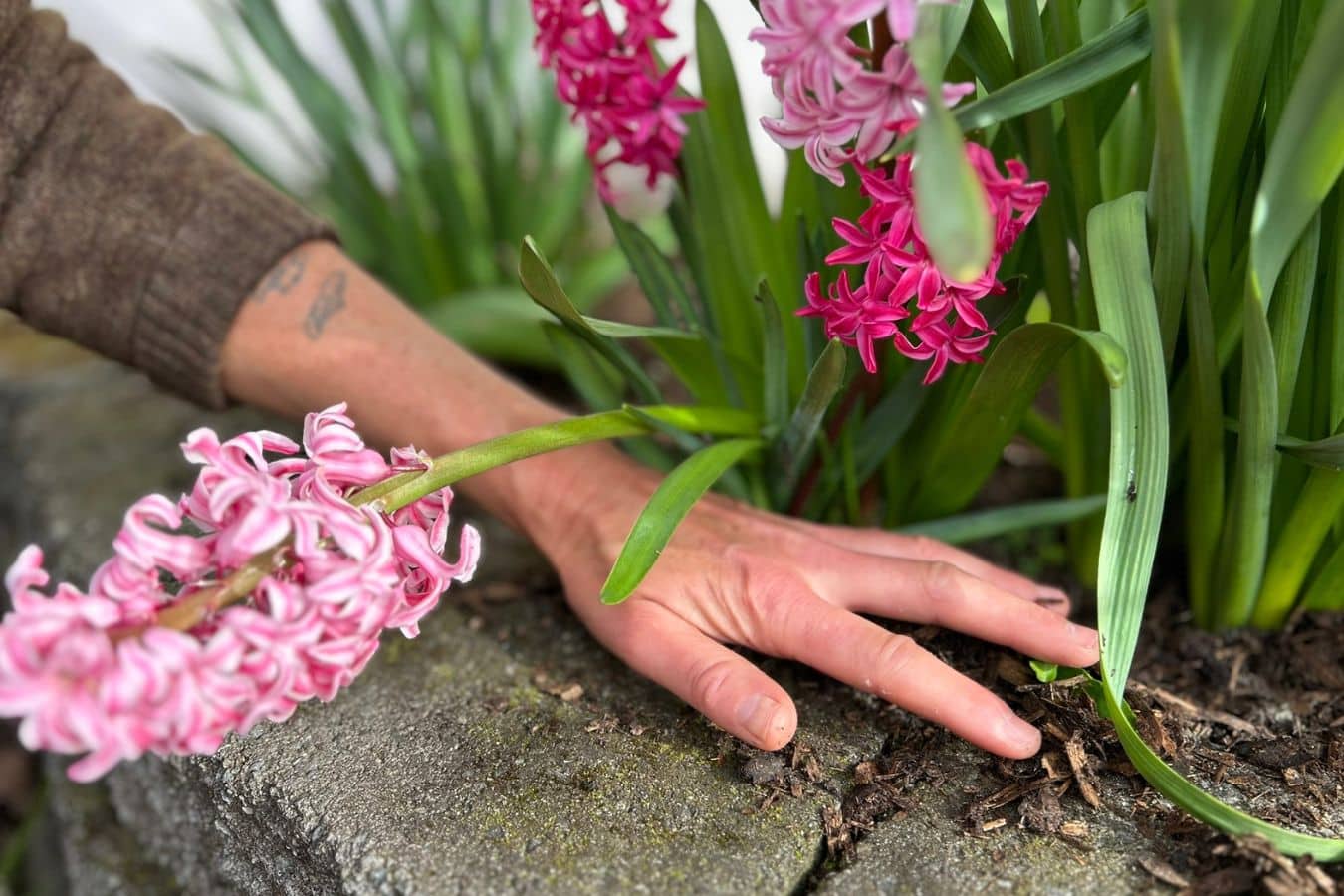
- Rules for placing or scattering soil created through human composting are often the same as for cremated remains, though they vary by state.
- Landowner permission is typically required to scatter on private property.
- Some public lands require a permit.
- Scattering in navigable waterways is often allowed.
How Does Human Composting Become Legal?
Laws governing human remains vary greatly from state to state, as do the processes for passing new laws. Recompose spearheaded early efforts to legalize human composting in Washington, which became the first state to do so in 2019.
Since then, a growing movement—fueled by strong public interest—has helped legalize human composting in over a dozen states, with more considering legislation each year.
See where human composting is legal and where new bills have been introduced.
How Human Composting Works
The biological process mimics the earth’s natural cycles in a controlled environment and is similar to what occurs on the forest floor as organic material decomposes and becomes topsoil.
- The body is placed into a composting vessel surrounded by a mixture of wood chips, alfalfa, and straw carefully calibrated and specially tailored to each individual. The vessel is closed and the transformation into soil begins
- In the vessel, microbes power change at the molecular level, resulting in the formation of a nutrient-rich soil. The cutting-edge design of Recompose’s vessels, coupled with our highly trained operators, ensures that the resulting soil is beneficial for plants and trees.
- After five to seven weeks, depending on the body, the soil is removed from the vessel and placed in a curing bin for an additional three to five weeks. Each composted body creates approximately one cubic yard of soil.
- The soil created returns nutrients from our bodies to the natural world. It sequesters carbon and nourishes new life.
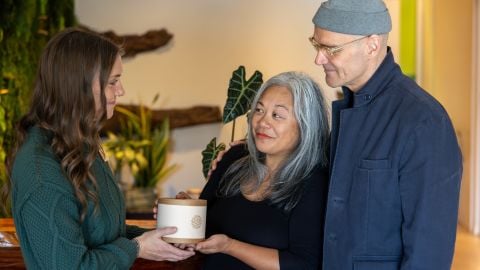
Family and friends can keep the soil in gardens, to plant trees, or scatter across favorite places. Recompose offers a one-of-a-kind Land Program so clients can donate any amount of soil to revitalize protected lands stewarded by accredited conservation organizations.

Why People Choose Soil Transformation
Human composting offers the opportunity to give back to the earth and leave a lasting impact at the end of life. Ecological benefits include:
- 87% less energy used than cremation or burial
- One metric ton of carbon pollution saved per person
- No toxic embalming chemicals or harmful emissions
- No land or resources used for burial plots or caskets
- Strengthen ecosystems by returning organic matter to the earth
If You’re Curious About Human Composting
If Martha’s comment sparked your interest, here are four ways to dig deeper with Recompose.
- Start planning ahead
Set up your future human composting with Recompose’s prepaid funeral plan, Precompose. It’s simple, flexible, and risk-free. - Tour our human composting facility
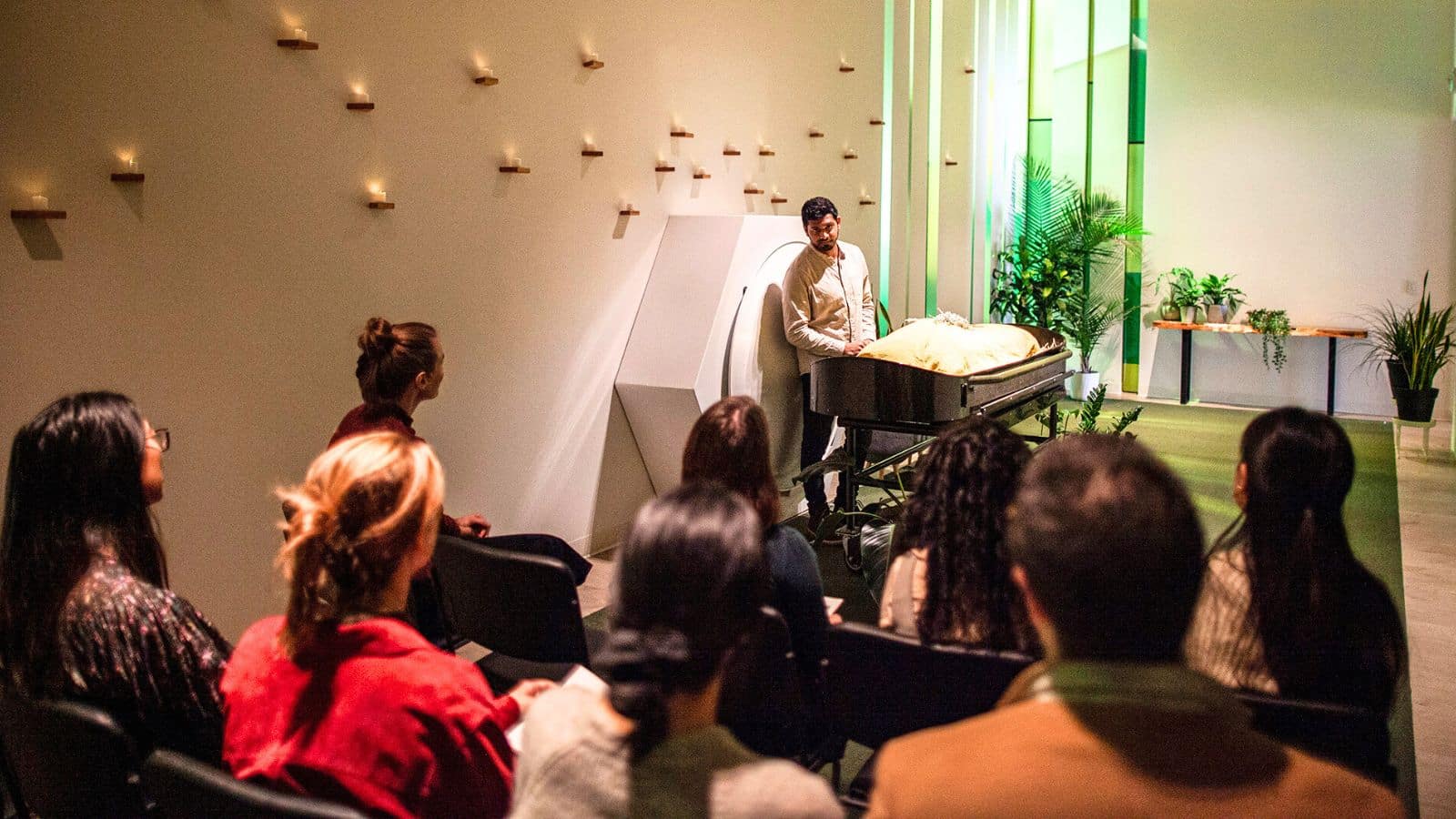
Learn about the history of human composting and how it works during a virtual or in-person tour at Recompose. Explore our innovative ceremony spaces and where soil transformation takes place. - Watch the talk that sprouted the movement
Katrina’s TEDx talk in 2016 was the first time many people heard of the concept of human composting. With over 1.5 million views, it sprouted a movement to grow sustainable death care.
- Stay in touch
Get the latest news on human composting, inspiring content about the end of life, and useful planning resources delivered to your inbox
