



Human composting, also called natural organic reduction or soil transformation, is a form of disposition that transforms a body into soil. The biological process mimics the earth’s natural cycles and is similar to what occurs on the forest floor as organic material decomposes and becomes topsoil. The process of human composting happens inside of a vessel and is carefully monitored by certified professionals.
History of Human Composting
Human composting was originally conceived by founder Katrina Spade in 2011, and developed by Recompose over years of rigorous research and design. Human composting was first legalized in Washington State in 2019 and is now legal in multiple states across the country.
How Human Composting Works
Human composting typically takes between 8 to 12 weeks from the time a body is laid into a composting vessel until the soil is ready to be returned.
The Laying In
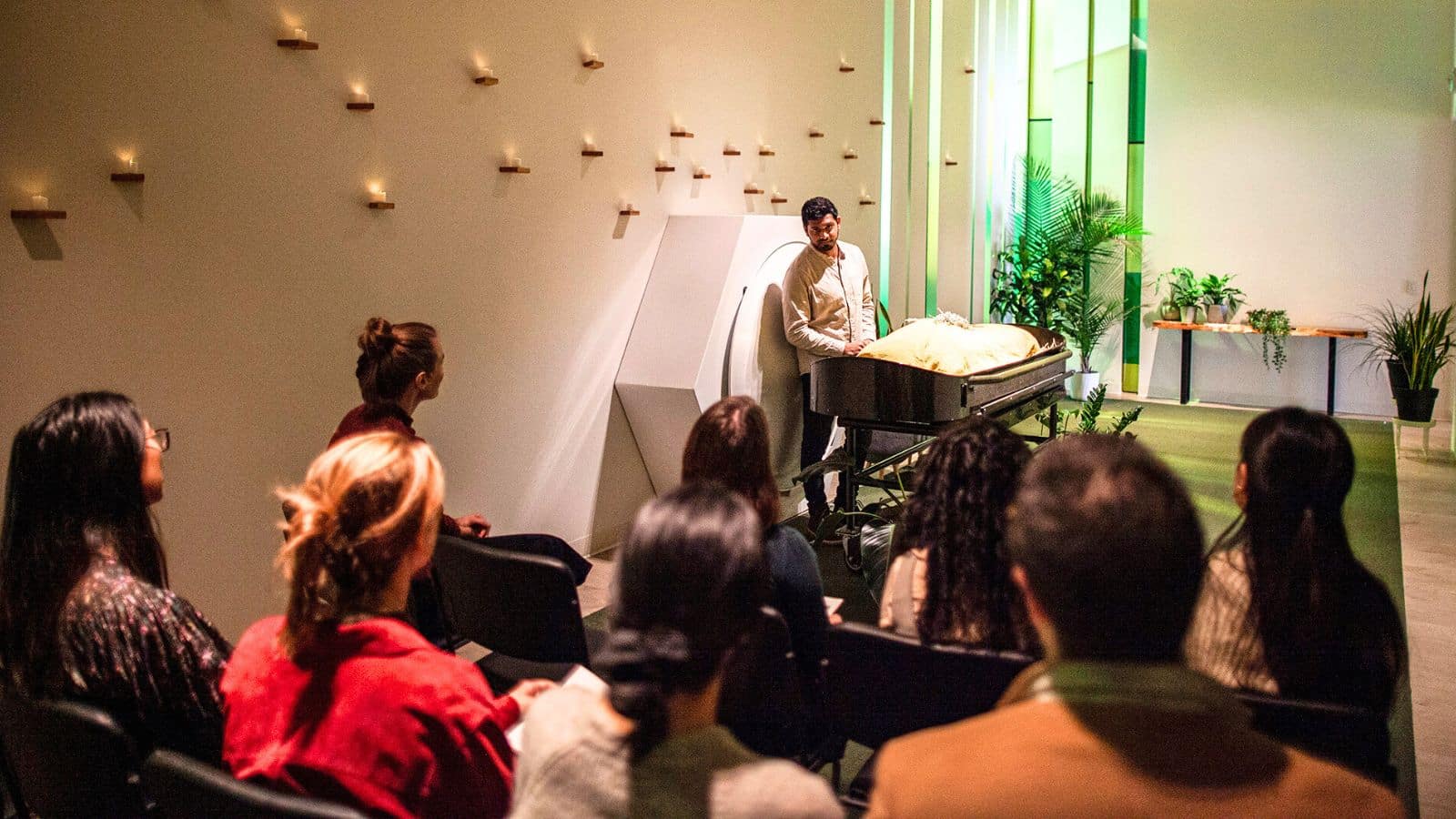
At the time of laying in, the body is placed into a composting vessel, a steel cylinder, 8 feet long and 4 feet tall. The body is surrounded by a mixture of wood chips, alfalfa, and straw carefully calibrated and specially tailored to each individual. The vessel closes and the transformation into soil begins.
The Vessel Phase
The temperature inside the vessel rises over time as the microbes work and is sustained over 131 degrees Fahrenheit for a minimum of 3 continuous days. Over the next five to seven weeks, the body breaks down thanks to the natural action of aerobic microbes. Recompose staff monitor the temperature inside the vessel to determine when a rotation is needed to increase oxygenation and expose additional energy to the microbes.
The Curing Phase
The soil is removed from the vessel and placed in a curing bin where it is aerated for an additional three to five weeks. Curing compost is still an active, living material that will continue to experience changes and reduce in weight and volume.
The Soil
Each body creates about a cubic yard of soil, weighing between 500 to 1,000 pounds. The nutrient-rich soil is ready to grow new life and returns nutrients from our bodies to the natural world. It sequesters carbon and nourishes new life in gardens, forests, and on conserved lands.
Environmental Impact
Human composting uses 87% less energy than traditional burial or cremation and saves one metric ton of carbon pollution That’s equivalent to the CO2 emissions of driving 2,481 miles or 1,102 pounds of coal.
Funeral practices like cremation and embalming have a profound impact on the environment. Each year, about 3 million people die in the U.S. Cremation burns fossil fuels and emits carbon dioxide and particulates into the atmosphere. Conventional burial consumes valuable urban land, pollutes the soil, and contributes to climate change through the resource-intensive manufacture and transport of caskets, headstones, and grave liners. Every year in the U.S., caskets alone use 4 million acres of forest.
