
Is all human composting soil the same quality?
No. There can be a significant difference in the quality of soil produced from human composting. Soil quality directly impacts its ability to support healthy plant growth and overall soil health. Factors such as nutrient availability, pH balance, and microbial stability all contribute to its effectiveness. Recompose is proud to pioneer this field and lead […]
What is human composting?
Human composting, also called natural organic reduction or soil transformation, is a form of disposition that transforms a body into soil.
How can human composting soil be used?
The soil created by human composting is nourishing for trees and plants. Learn more about how Recompose customers have used the soil.
How does human composting reduce your carbon footprint?
Human composting saves carbon as it uses less energy than cremation. Learn more about the positive environmental impact of human composting.
How does a human composting vessel work?
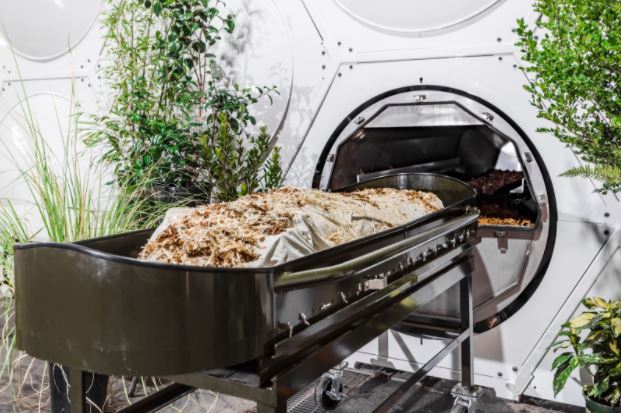
At Recompose, the human composting takes place in a vessel. Learn more about the steel cylinder and the process of composting.
What happens to artificial limbs or tooth fillings during human composting?
Non-organics like metal fillings, prostheses, and artificial joints are recycled if possible. Learn more about human composting.
What happens to drugs and medicine during human composting?
Human composting eliminates disease pathogens and parasites. Learn more about the sustained heat that removes toxins from the body.
What happens to diseases during human composting?
Human composting eliminates diseases. Learn more about how the heat during the process ensures the soil created is free of harmful pathogens.
How long does human composting take?
The human composting process generally takes between eight to twelve weeks. Learn more about human composting.
How does human composting work?
Human composting is the transformation of a human body into soil. Learn more about the process followed at Recompose.
What happens to bones and teeth during human composting?
Bones and teeth do not fully break down in the human composting process due to the mineral composition. Learn about how they are broken down.